by Debra White | Opinion / Commentary
THE ORDER OF BLACK POWER IN AMERICA
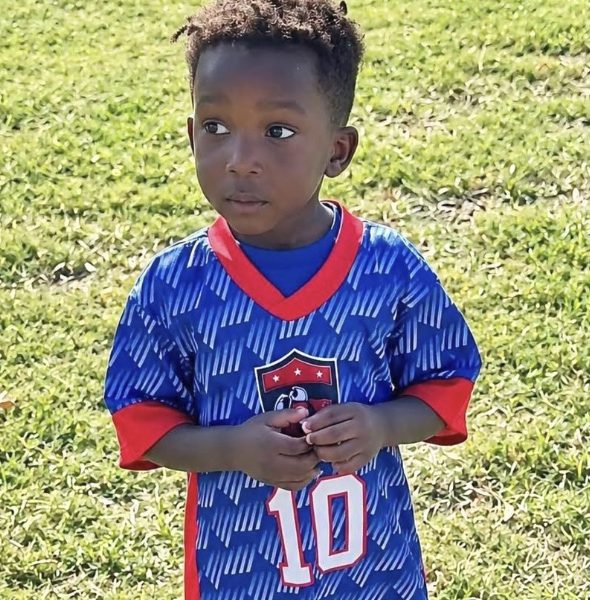
What does Black Power in America look like? Sometimes it is right before our eyes, unfolding in real time, while the nation watches. Sometimes it is a three-year-old boy kicking a soccer ball, displaying extraordinary talent, and capturing the attention of an entire country.
Meet Nevada Pierre, the three-year-old soccer sensation whose abilities have taken social media and the sports world by storm.
At an age when most children are just beginning to understand the game, Nevada is scoring goals, dribbling around older children, and demonstrating remarkable ball control. His talent has attracted national media coverage, professional soccer opportunities, celebrity attention, and financial support.
Yet behind this extraordinary story is another story that deserves attention: the Power of Black Power in Black American identity and the way America presents Black excellence to the world.
THE FATHER BEHIND HIS SON’S TALENT
Nevada’s father, Don Pierre, is Haitian American. His mother, Martasia Griffin, is a Black American woman.
Who has been putting in the work behind this three-year-old’s remarkable soccer abilities?
His father.
ABC News reported on October 27 that Nevada trains for three hours daily with his father. ClickOrlando reported on November 6 that Don taught his son the game. His involvement in Nevada’s development is central to understanding how this little boy acquired his extraordinary skills.
This is not simply a father watching his son play. This is a father investing time, patience, instruction, and effort into developing an exceptional young athlete.
His mother has also been involved, cheering him on and handling his growing business inquiries. In her November 6 CBS interview, she explained that she manages his emails, business calls, and incoming opportunities.
She is a mother celebrating her child’s accomplishments. The question is why the national television spotlight has centered so heavily on the Black American mother when the Haitian American father is responsible for much if not all of Nevada’s athletic development! Don has received considerably less television attention.
ABC News featured the mother on October 27. CBS News featured her again on November 6.
Where is the comparable national television interview with the father?
THREE YEARS OLD AND ALREADY ATTRACTING THE BIG NAMES
Nevada’s growing popularity has opened doors that most young athletes could never imagine.
Consider what has happened:
- Jay-Z and Roc Nation: Roc Nation has arranged a training trip to Spain for Nevada in December.
- Eddie Johnson: The former United States men’s national team player offered Nevada a full scholarship to his EJE7 Soccer Academy.
- Ms. Rachel: The popular children’s entertainment personality was among those publicly supporting the young soccer sensation.
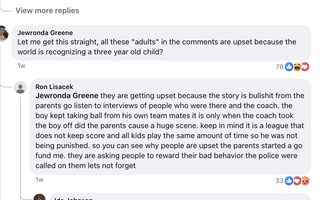
- Social media: Nevada already had a substantial following before the incident at the Florida youth soccer game brought him national attention.
- Financial support: His family’s GoFundMe campaign surpassed its original $30,000 goal, showing more than $66,000 in donations when checked.
At three years old, Nevada has attracted the attention of professional sports figures, entertainment personalities, major management interests, and thousands of supporters.
This is an extraordinary level of attention for a child so young.
And it is happening around a little Black American boy whose family includes a Haitian American father.
THE QUESTION AMERICA HAS NOT ASKED
Here is where the story becomes much bigger than soccer.
If Nevada’s mother and father were both Haitian, would this little boy have received the same level of national attention and recognition?
Would his story have been embraced in the same way by the Black American community? Would the same sports personalities, entertainment figures, and national television networks have gravitated toward him?
These are important questions about American identity, cultural influence, and recognition.
Nevada’s mother is Black American. His father is Haitian American. As his popularity has grown, his mother has become the primary television spokesperson for the family.
Even ABC News has demonstrated something worth examining in its presentation of the story. Its October 27 headline identifies the subject as the mother of a three-year-old soccer player. Its report identifies him as Nevada Pierre. CBS News, on November 6, titled its report Mom of viral 3-year-old soccer star speaks out about police being called to game, and repeatedly referred to the child as Nevada.
The surname Pierre appears in the reporting, but the use of his first name in headlines and television presentation deserves attention.
A name carries family history. A family carries heritage. And heritage matters when a nation is celebrating a child’s accomplishments.
TIGER WOODS: ANOTHER FAMILY, ANOTHER GENERATION
Consider Tiger Woods.
His father, Earl Woods, was African American. His mother, Kultida Woods, was born in Thailand.
Earl played a significant role in Tiger’s athletic development. He introduced him to golf, trained him, and became a prominent public figure throughout his son’s rise.
Tiger became one of the greatest golfers in history. His accomplishments brought worldwide recognition, and his father’s contribution became a major part of the story.
Now look at Nevada.
Two exceptional young athletes. Two fathers who played important roles in developing their sons’ athletic abilities. Two families with different national backgrounds.
Yet the media visibility surrounding the parents deserves examination.
The comparison is not about whether mothers or fathers deserve recognition. It is about the distribution of recognition and the way American media presents the people behind exceptional Black talent.
THE POWER OF BLACK AMERICA
This is where the larger story comes into view.
Our influence in America is enormous.
Look at professional sports. Look at music, entertainment, fashion, business, politics, and popular culture. Our achievements have helped shape the identity of the United States and influence the world.
Black American excellence is not something America can separate from its national identity.
When a Black American athlete becomes exceptional, the country celebrates that achievement. When a young Black American child demonstrates extraordinary abilities, the nation takes notice.
Nevada’s story has become part of that phenomenon.
His growing popularity is connected to the attention, enthusiasm, and support surrounding him within Black America. His mother’s American identity provides a connection to that community, while his father’s Haitian heritage represents another part of his family history.
Meanwhile, Haitians, Jamaicans, and Africans living in America have their own national identities and immigration struggles. Their experiences deserve to be understood within the larger picture of American society.
Black America has a distinct historical presence and cultural influence in this country. Our contributions are woven into the nation’s development, and our accomplishments continue to command international attention.
THE FINAL QUESTION
Nevada Pierre is only three years old.
His father has invested the time and effort into developing his soccer abilities. His mother is now handling the attention, interviews, and business opportunities surrounding his growing popularity.
The boy is receiving opportunities from Roc Nation, a full soccer academy scholarship, celebrity recognition, and thousands of dollars in public donations.
Yet the national television spotlight has largely centered on his mother.
Why?
Is America embracing the complete family story, or is the American connection becoming the dominant public identity as this little boy’s popularity grows?
And perhaps the most revealing question of all:
If both parents were Haitian, would America be telling the same story about Nevada today?
That is the question I want readers to consider.
Because this story is bigger than a soccer ball, bigger than a three-year-old athlete, and bigger than a television interview.
It is about Black Power of Black America in America.
Our identity. Our influence. Our accomplishments. Our place in the American story.
The power is there for everyone to see.
Sources
- ABC News — October 27 report
- CBS News — November 6 interview
- ClickOrlando — Roc Nation and Spain training opportunity
- TheGrio — Nevada’s soccer development and father’s involvement
- Family fundraising campaign