by: Briahna Thomas
U.S. Virgin Islands – Consumers and business owners across the territory are bracing for a compounding economic squeeze as global energy shocks and persistent Federal Reserve interest rate pressures converge on the local economy.
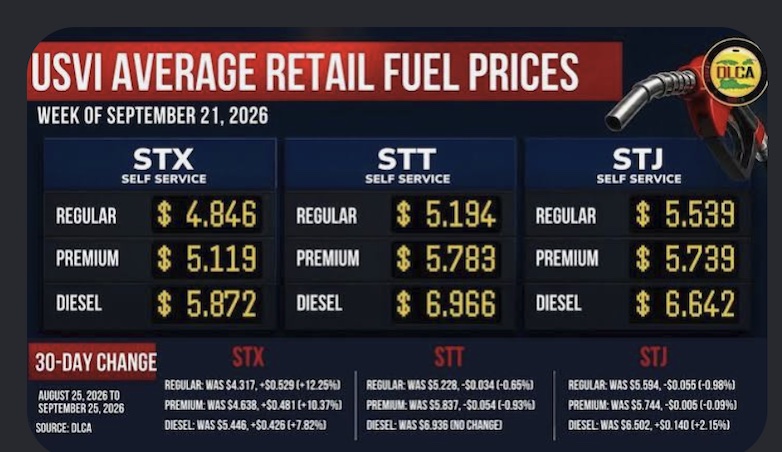
Recent attacks on Saudi Arabian oil infrastructure pushed global Brent crude benchmark prices near $108 a barrel this month, threatening to trigger fresh retail fuel increases in an island economy that already contends with significant geographic disparities and steep living costs. At the same time, national borrowing rates maintained by the Federal Reserve continue to elevate the cost of credit card balances, small-business loans, and home mortgages.
According to a price survey released by the Virgin Islands Department of Licensing and
Consumer Affairs (DLCA), retail regular fuel prices remain sharply divided across the territory, averaging $4.33 per gallon on St. Croix, $5.26 on St. Thomas, and $5.54 on St. John. Diesel prices reached an average of $6.94 per gallon on St. Thomas.
The latest DLCA survey noted that Sol Petroleum’s wholesale rack rate on St. Croix jumped by 31 cents to $3.65 per gallon for regular fuel, representing a 9.3 percent rise, even before the full local impact of the recent Saudi pipeline shutdown and subsequent export disruptions had filtered through regional supply chains.
During an earlier legislative hearing examining the territory’s cost-of-living challenges, DLCA Assistant Commissioner Horace Graham pointed out that the territory’s unique logistics inherently magnify external shocks.
Graham told lawmakers that the Virgin Islands’ “geographic isolation, imported-fuel dependence and limited economies of scale” have long contributed to energy prices that sit substantially above mainland benchmarks.
Addressing the persistent inter-island price gaps, DLCA Commissioner H. Nathalie Hodge explained that infrastructure differences play a central role.
“Currently, most of the fuel sold in the St. Croix district is held in the terminal on island, while St. Thomas and St. John rely on smaller shipments that arrive much more frequently,” Hodge
said.
Compounding the fuel pressure, elevated borrowing rates from the Federal Reserve mean local
businesses face higher financing expenses to carry inventory and manage freight bills. Because
nearly all consumer goods and utility inputs in the territory are transported by sea, rising ocean
carrier fuel surcharges and commercial borrowing costs directly inflate grocery and household
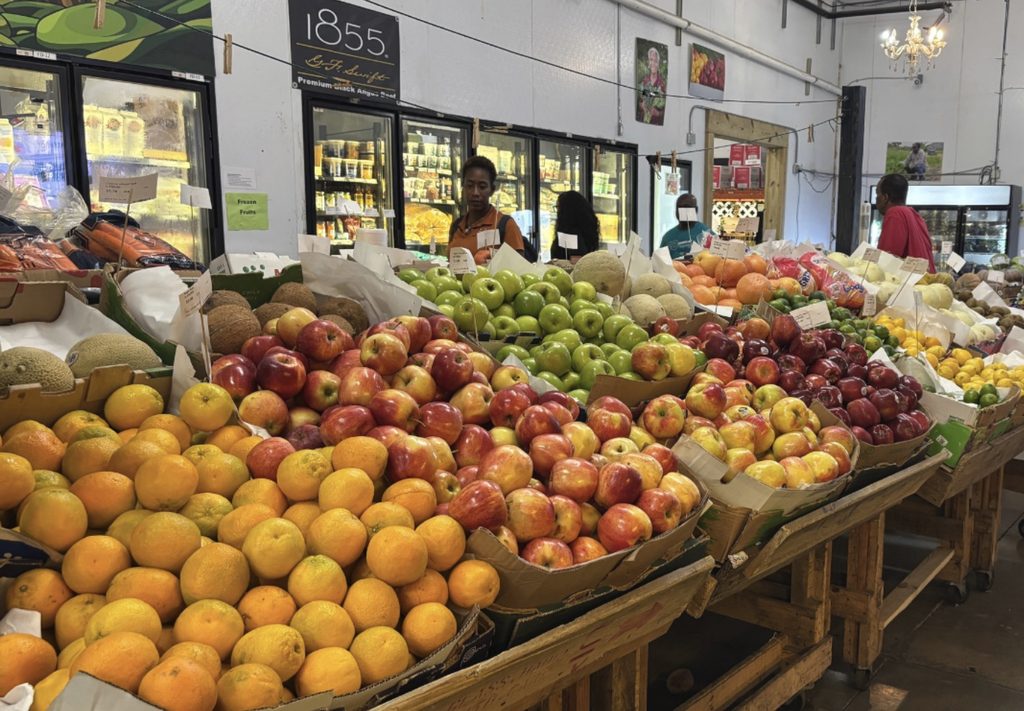
utility bills.Local officials note that while Virgin Islands consumers are accustomed to managing isolated island markets, the combination of international oil volatility and tight national monetary policy will require households to budget cautiously as year-end expenses approach.